
From the vineyard to HARNIX: how we built a robot for Moldova's rows
A field-tested robot, a remote teleoperator, and a simple promise to growers: zero CAPEX, billed only on harvested kilograms. The story of how a Moldovan table-grape exporter became the lab where HAR-v1 grew up.
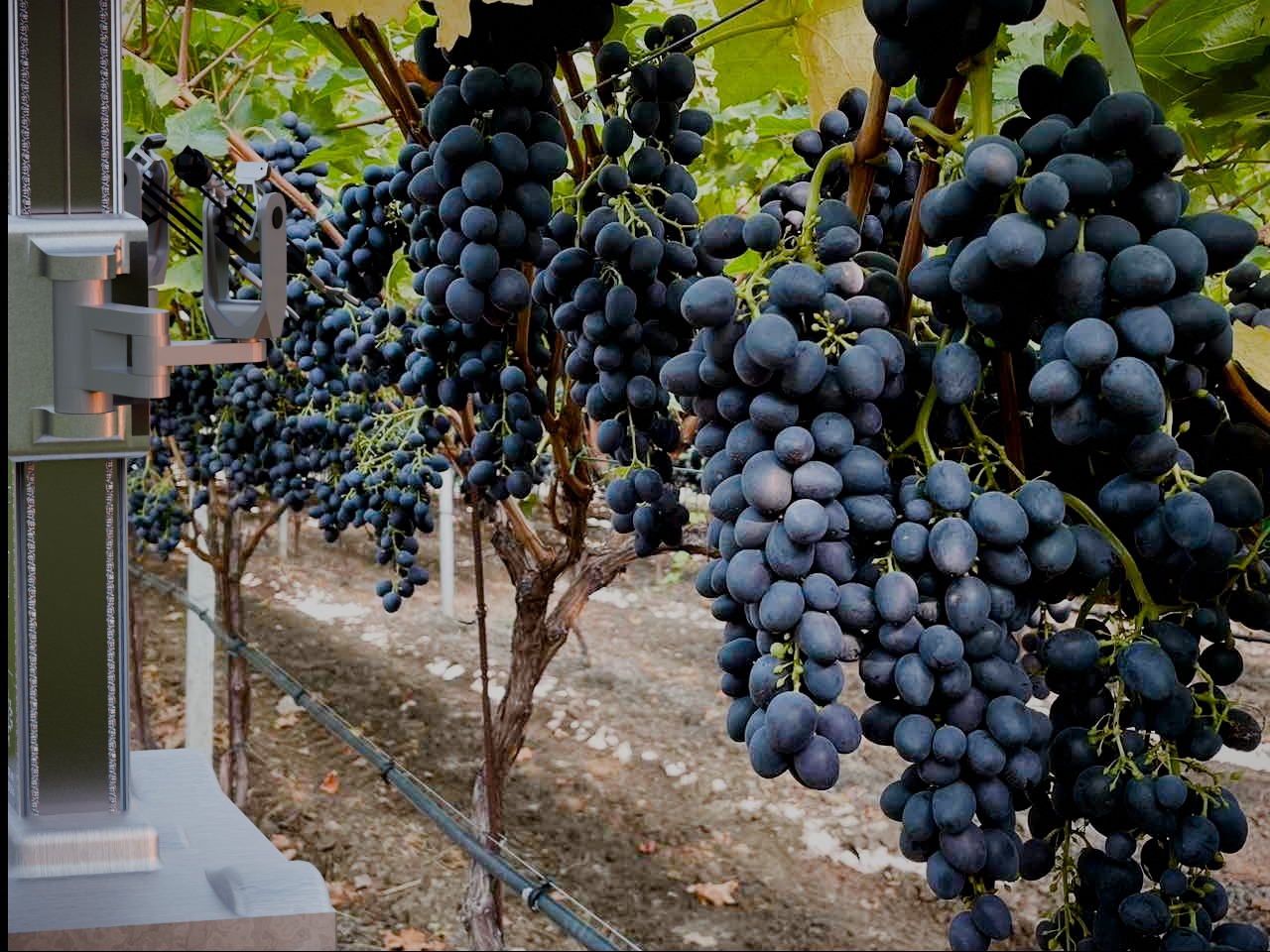
In Moldova, the row is the unit of truth. You don't learn the harvest from a slide deck — you learn it standing between two pergola wires at five in the morning, with cold dew on your sleeves and a wooden crate at your feet.
HARNIX wasn't born in a robotics lab. It was born inside Frudova (C.I. VED-MAR AGRO), a table-grape exporter shipping into Lidl, Biedronka and Mega Image. The problem was simple, the way real problems usually are: there weren't enough hands. Some seasons we left fruit on the vine. Other seasons we paid for hands that didn't arrive.
We tried the obvious answers first. Bigger crews. Higher pay. Bonus systems. Nothing scaled. The labor wasn't there to scale.
So we asked a different question: what if the robot did 50% of the work, and a human did the other 50% — but from anywhere in the world?
That became HAR-v1. A carbon-fiber arm, a stereo camera, a smart shear, and a fleet OS that hands hard cuts back to a teleoperator in a few hundred milliseconds. The robot picks autonomously most of the time. When the cluster is hidden behind leaves, or two clusters are tangled, a human takes over for three seconds and the robot keeps going.
The billing model was the hard part to get right. Farmers don't want another capital project. So we built it as a service: zero up-front cost, billed per harvested kilogram delivered to the crate. Farmers pay only for output. We carry the technology risk.
This is the model we'll take to Northwestern Europe in 2026 — starting with greenhouses and pergola vineyards in the Netherlands. But the lab will stay in Moldova. The rows here are honest. They tell us when something is broken, and they tell us fast.