The tomatoes are ripe. The workers aren't coming.
Hundreds of thousands of tonnes of high-value produce rot in Europe every year because nobody is left to pick them. Here is how we are building the machines that change that.
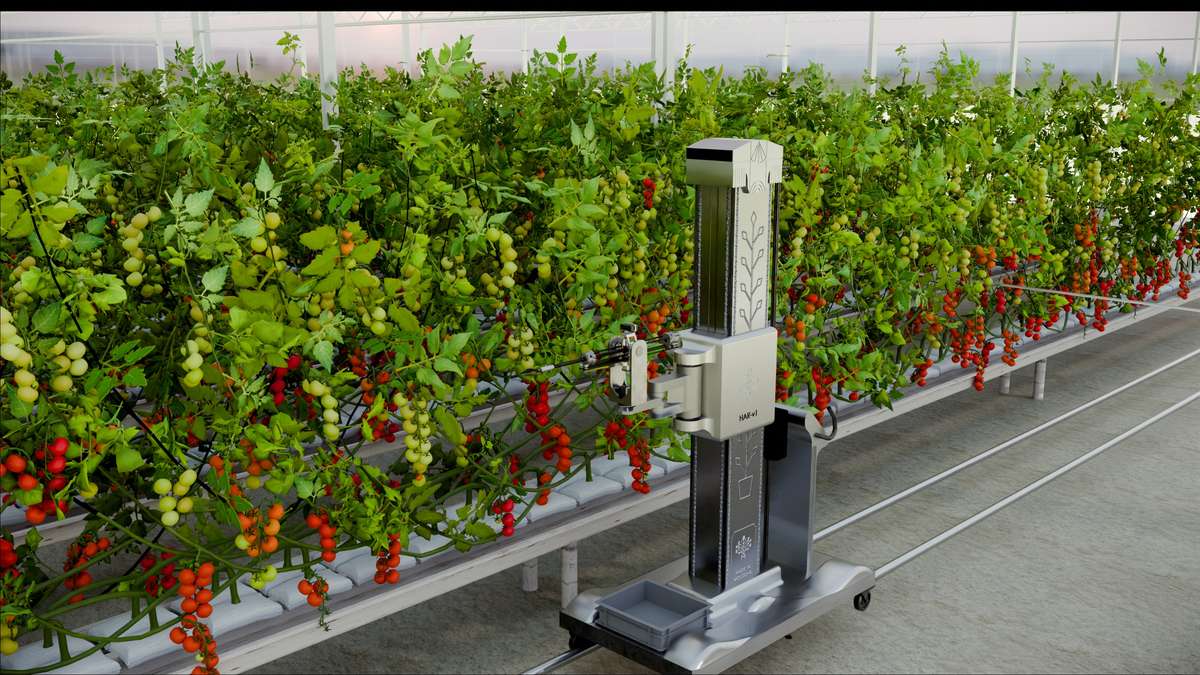
Every year, hundreds of thousands of tonnes of high-value produce rot on European vines and stems. Not because of weather. Not because of disease. Because there's nobody left to pick them.
Walk into any large-scale tomato glasshouse in the Netherlands and you'll hear the same story. The workers who used to show up from Romania, Moldova, Poland — fewer arrive each season. The ones who do come are older. The young ones found other work. The grower watches ripe clusters hang past their window and calculates losses.
This is not a future problem. It's happening right now, across every major greenhouse and vineyard region in Europe. Over 700,000 seasonal agricultural positions go unfilled every year in the EU. That's not a statistic from a policy paper — that's food left in the field.
We started Harnix because we think the answer is not more bus tickets from Eastern Europe. It's robots. Specifically, it's fleets of semi-autonomous telerobots that can work the rows without rest, and that call home to a human operator when they get stuck.
What we build
Harnix is a European company with a Moldovan heart. Incorporated in Estonia, with subsidiaries in Moldova and Romania. Our engineering team is in Chisinau. Our robots are designed to work in the Netherlands, Spain, Italy — wherever the glasshouses and vineyards are.
We have three hardware products and one drone. Each one fills a specific gap in the harvest chain.
Harvix
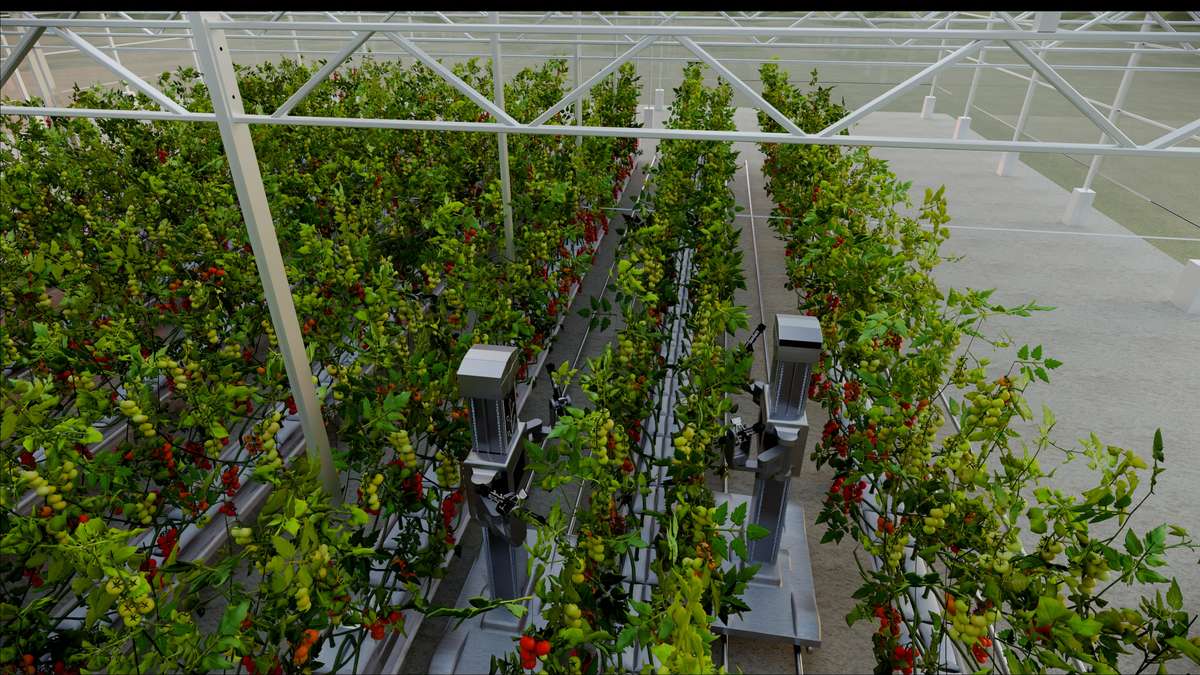
Our greenhouse robot. Harvix rides on the pipe rails that are already installed in every modern glasshouse — the same rails the workers roll their carts along. It has one or two robotic arms, 3D machine vision, and enough autonomy to handle the vast majority of picks on its own. When it encounters something it can't figure out — an oddly shaped cluster, a stem it can't reach, a leaf in the way — it flags the task and a human takes over remotely.
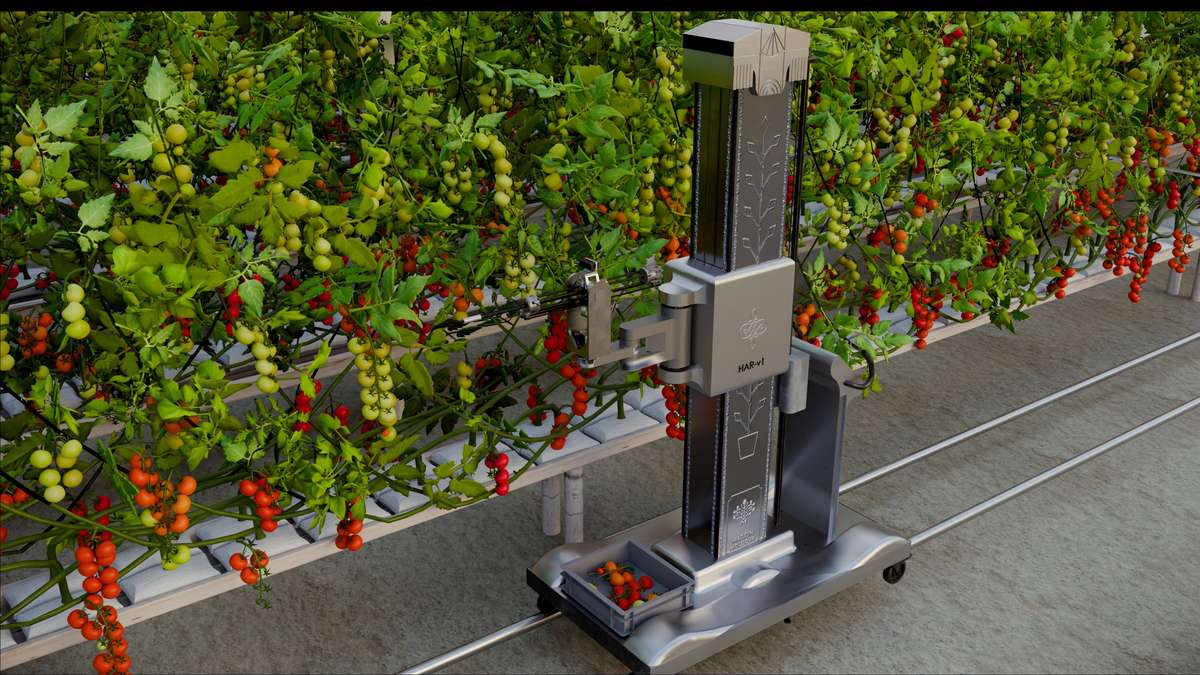
Harvix working between tomato rows. The robot mounts on existing pipe rail infrastructure.
The full design — CAD, electrical, software — is done. We have a digital twin that runs in simulation, and we're currently acquiring the physical components: motors, reductors, chassis, belts, electronics. Tomatoes, bell peppers, cucumbers, strawberries — the crops where the labour cost per kilogram is highest and the grower is most willing to try something new.
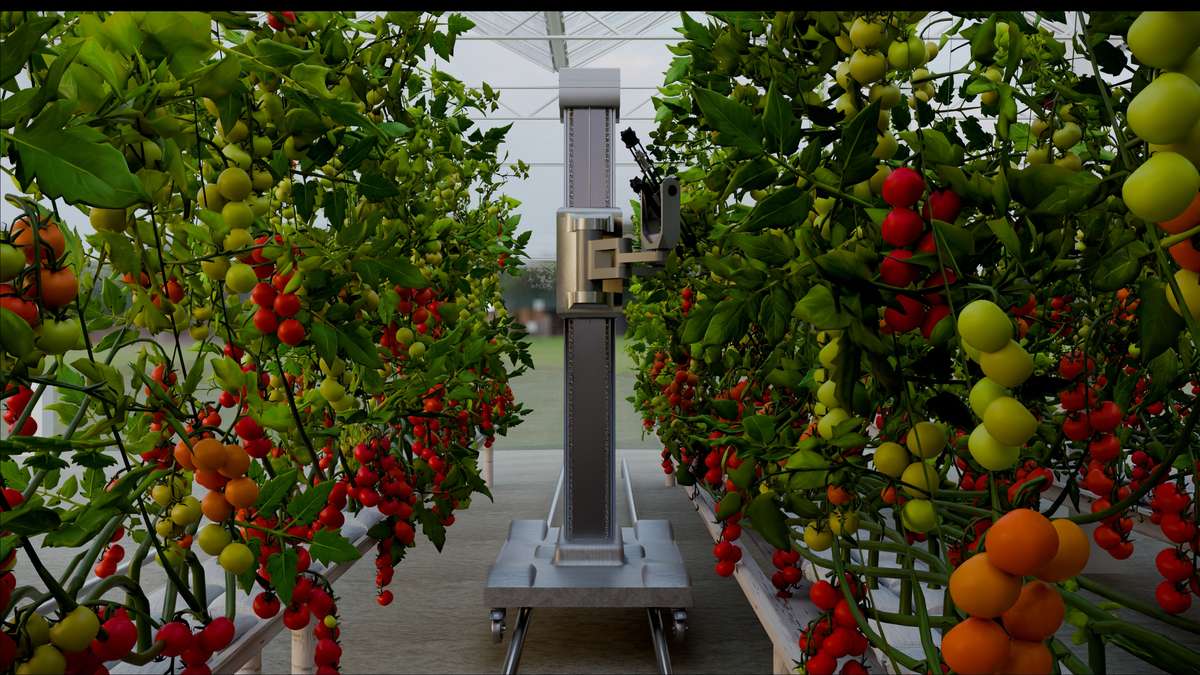
Harvix navigating a greenhouse aisle. The arm extends to reach clusters on both sides.
Harvier
Same brain, different body. Where Harvix rides rails inside a controlled glasshouse, Harvier rolls on tracks through the uneven dirt of a vineyard. It has active stabilisation to keep the arms steady over roots, rocks, and slopes. The target crop is table grapes — one of the most labour-intensive harvests on the planet.
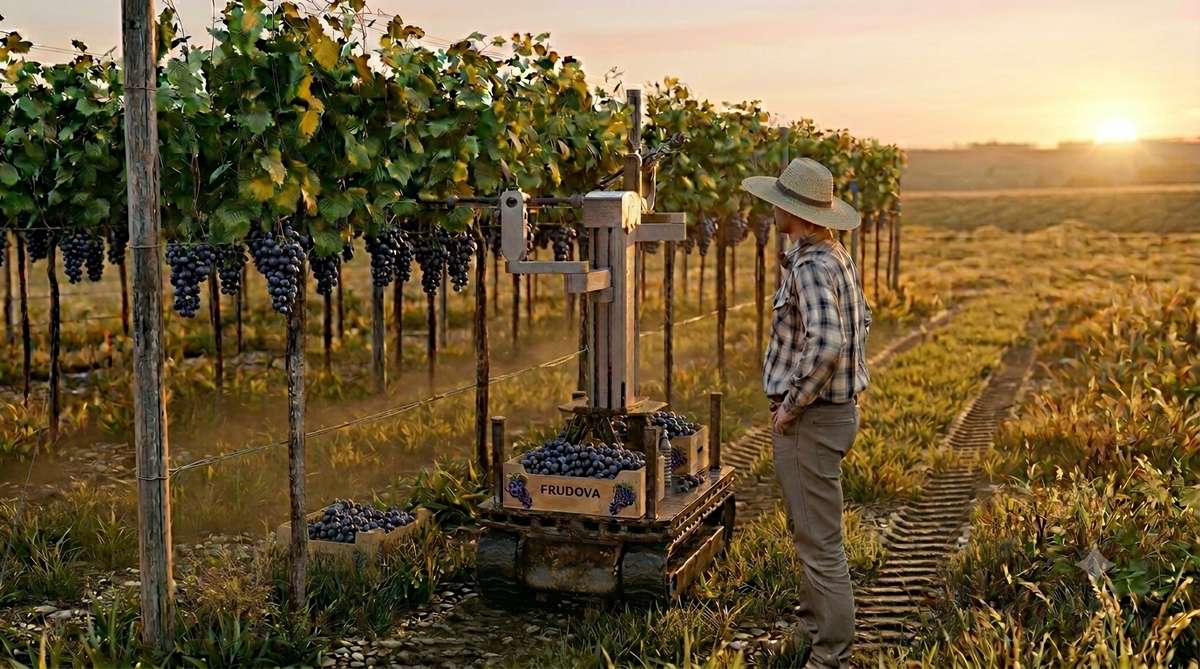
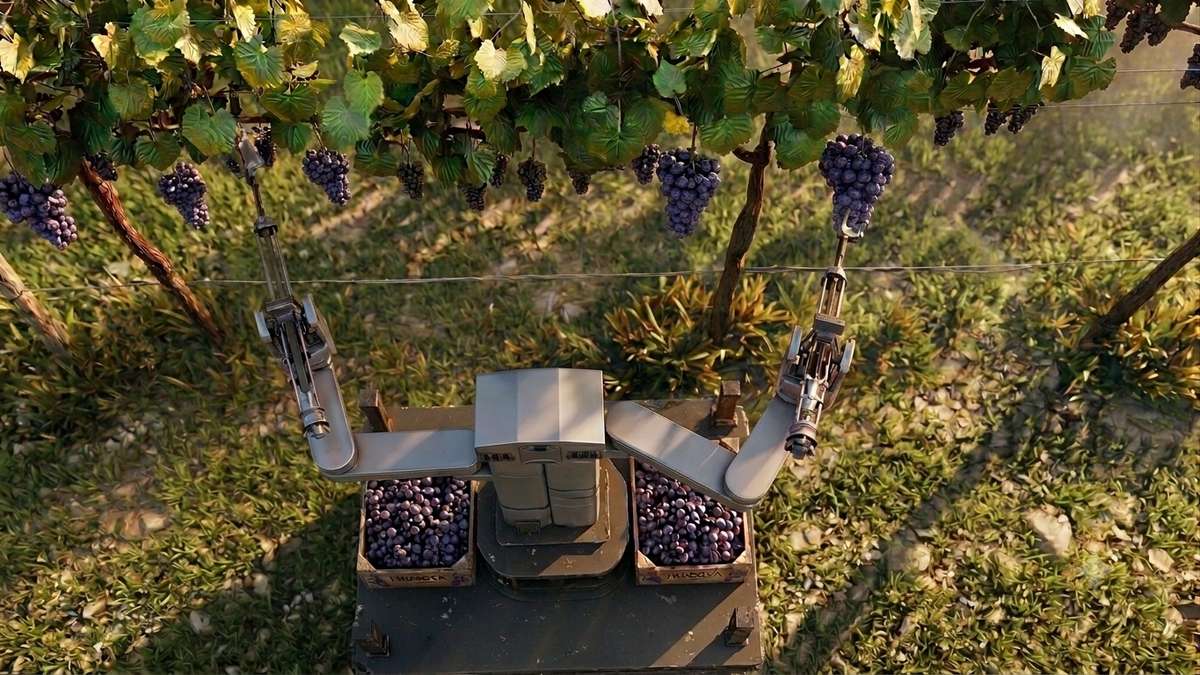
Harvier's design is finished, and the main components are on order from China — about two months out. The concept was born out of our partnership with Frudova, Moldova's largest exporter of table grapes. Vlad Vedrasco, Harnix's CEO, is also Frudova's co-founder, which gives us direct access to a vast network of fruit growers across Europe. If we're going to build robots that work in vineyards, we should start in our own backyard.
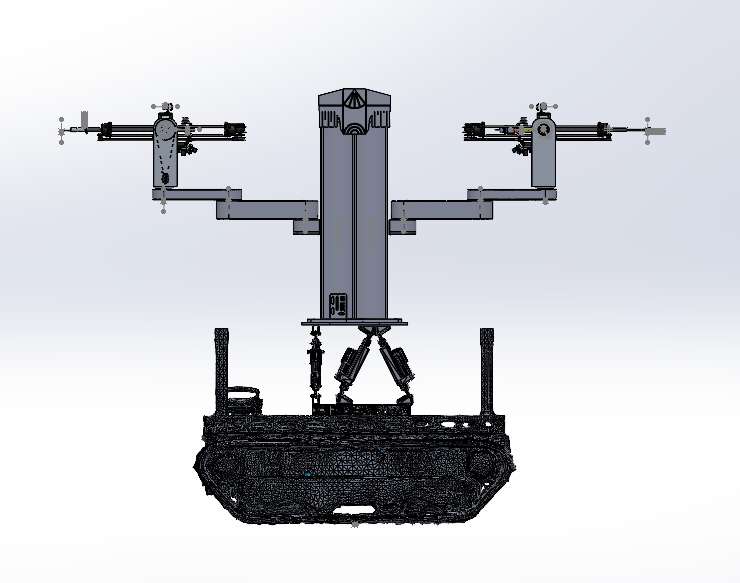
Harvier engineering model: tracked base with stabiliser, dual harvesting arms.
Harpoon
Before the robots can harvest autonomously, we need to teach them how. Harpoon is our data collection device: a pair of "smart scissors" with a 3D depth camera and an inertial measurement unit built in. Real human workers use it in real fields. Every cut they make becomes a labelled training sample for our AI.
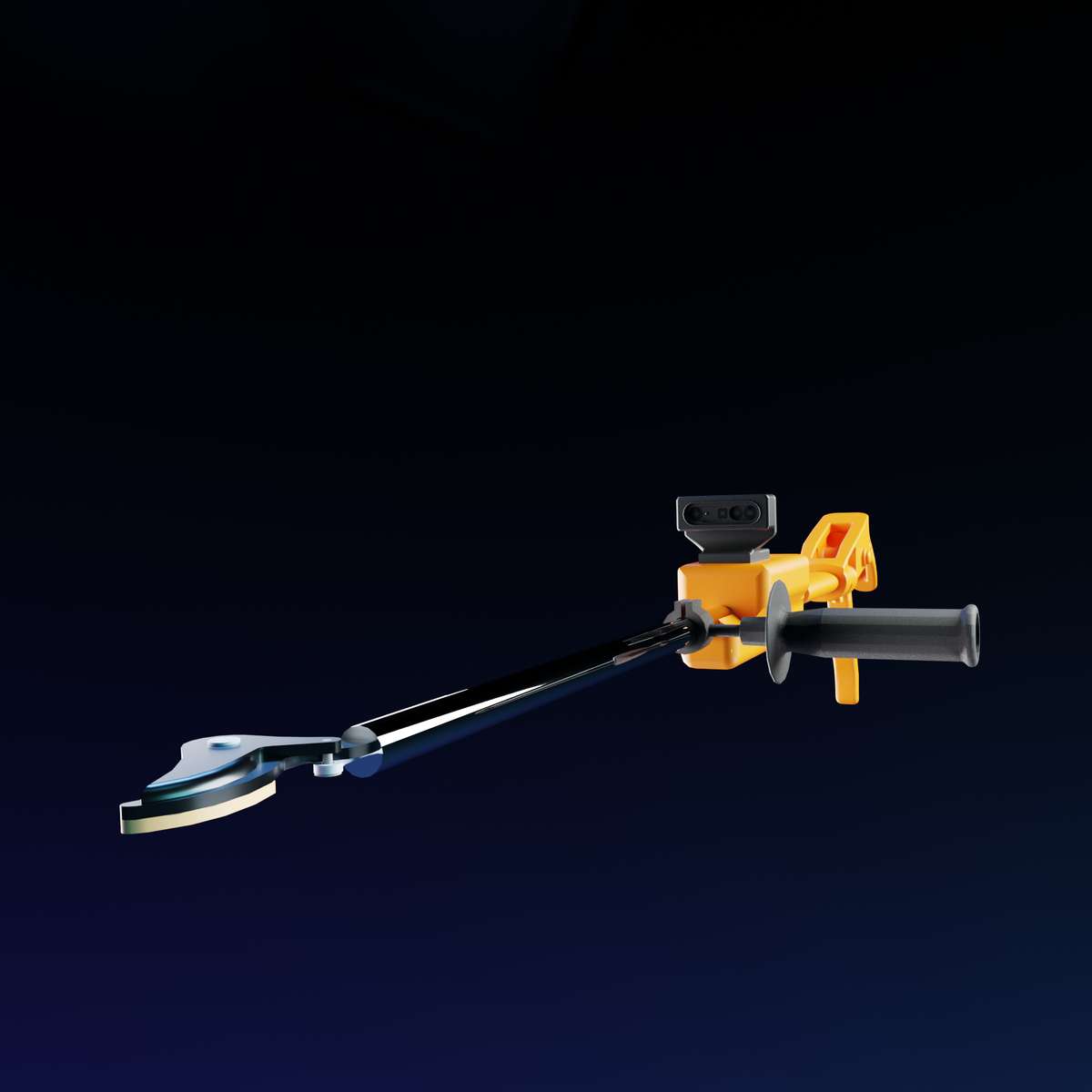
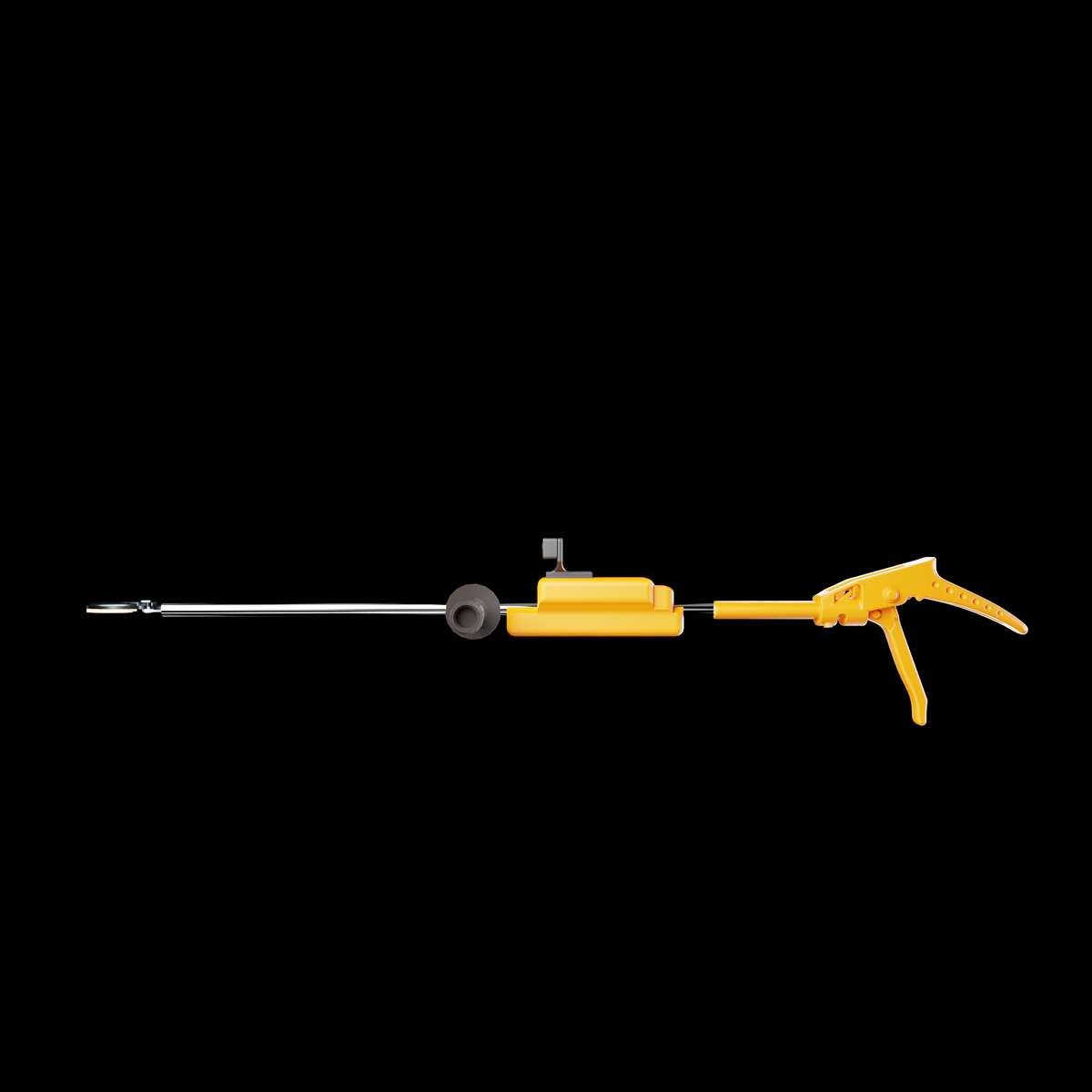
Harpoon is already in the field. We're actively collecting data in Moldovan vineyards, slowly building up the dataset cut by cut. Our target is 500,000 labelled cuts — enough to train models that can decide where to cut, how hard to grip, and how to navigate around leaves and stems. Once we have the full engineering team onboarded, this process will accelerate fast. Harpoon is also our way into the industry — it gives us direct relationships with harvest workers and farm operators, before we ever ship a robot.
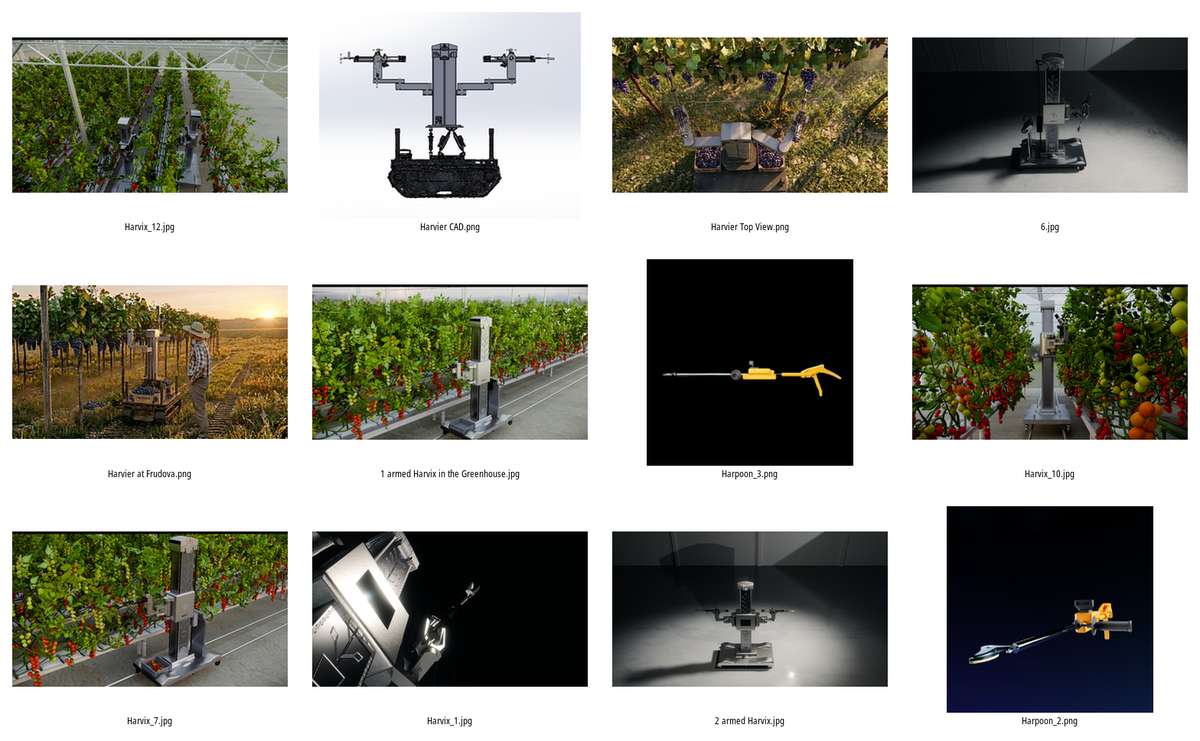
A worker using Harpoon in a vineyard. Every cut is captured as a training data point.
Harbee
A mapping drone that flies over the field before the fleet begins work. It builds a 3D model of the crop so the robots know where to go, what's ripe, and what to expect. Think of it as the fleet's advance scout.
The teleoperation model
Here's the part that usually surprises people. Our robots are not fully autonomous. They're not trying to be. Full autonomy in unstructured agricultural environments is a research problem that has eaten tens of millions in VC funding and produced very few working products. We don't think the technology is there yet, and we don't want to wait for it.
Instead, we built a system where the robot does everything it can on its own — and the moment it hits something it's not confident about, it stops, captures the scene, and pushes the task to a global queue. On the other end of that queue sits a teleoperator in Moldova with a gamepad and a monitor. They take control of the robot's arm, make the pick, and hand control back. The whole handoff takes seconds.
Harvesting remotely will feel like playing a video game — intuitive, easy, frictionless.
This is not a stopgap. This is the product. As the AI improves, the teleoperators handle fewer and fewer edge cases. But they're always there as a safety net. The grower gets continuous operation and a guarantee that no ripe fruit gets left behind.
And the grower pays per kilogram harvested. No six-figure robot purchase. No maintenance contracts. No risk. We eat the capex; they pay for results.
Why Moldova
People ask us this a lot. Why build a robotics company in Moldova? The answer has three parts, and they're all connected.
The talent. For the past fifteen years, since Maia Sandu's time as Minister of Education, Moldova has invested consistently in robotics education at the primary, middle, and high school levels. Moldovan teams win at international robotics competitions — regularly. But here's the ugly truth: that success doesn't materialise into anything after high school. There are essentially zero robotics engineering jobs in Moldova. So the talented kids leave. They go to the Netherlands, Germany, the United States. The country builds the talent and then watches it walk out the door.
If we want to keep even some of that talent at home, we have to create the jobs. That's what Harnix is.
The workforce. It's no secret that Moldovans already make up a significant share of the seasonal labourers who harvest crops in Dutch glasshouses, Spanish farms, and British polytunnels. They get on buses, work for a few months, and come home. We want to transform that into something better — a permanent, remote, partially-automated job where the worker sits at a desk in Chisinau with a gamepad, monitoring a fleet of robots and stepping in when one needs help.
The mission. When Harnix reaches maturity — roughly ten years from now — we plan to have robot assembly lines in Chisinau, Balti, Cahul, and Tiraspol, providing well-paying manufacturing jobs. Teleoperation centres in every region of the country, staffed mostly by young people who grew up with gamepads in their hands. These jobs bring hard currency from abroad and keep it circulating at home. That's not just a business plan. It's the reason we get out of bed.
The road ahead
Phase 1
Incorporate in Estonia. Hire two senior engineers and five interns. Build Harvix prototypes while scaling Harpoon data collection. Demonstrate live fleet harvesting with one or two teleoperators. Budget: $200K–$500K pre-seed round. This is where we are now — actively fundraising.
Phase 2
Consolidate the robot design. Build 50 units. Deploy to the Netherlands. Set up a small teleoperator team in Moldova. Become cash-flow positive. Budget: $1.5M seed round.
Phase 3
Scale across countries and crop types. Open the assembly lines. Build out the full teleoperator network. Budget: $10M Series A. After that, the business sustains itself.
We're currently raising our pre-seed round — $200K minimum, ideally $500K — to execute Phase 1. Two senior engineers, five interns, Harvix prototypes, and scaled-up data collection. We already have Harpoon in the field and a strategic partnership with Frudova that opens doors across European fruit markets. The goal is clear: prove that a fleet of semi-autonomous robots, guided by teleoperators six time zones away, can harvest a greenhouse full of tomatoes without leaving a single ripe cluster behind.

We know this sounds ambitious for a team working out of Chisinau. But the labour crisis isn't waiting for a safer bet. The tomatoes are ripe. Somebody has to pick them. We're building the machines that will.